
CASA AMOROSA

affordable book promotion

Why Every Author Needs an Audiobook

Why Every Author Needs an Audiobook

Audiobook publishing gives authors another powerful way to reach readers in 2026. As more people listen to books while commuting, exercising, traveling, or handling daily tasks, producing an audiobook can help authors make their work available to a broader audience and strengthen their overall publishing strategy. For many authors, an audiobook is no longer just an optional extra. It can become an important part of a complete publishing plan that includes print books, eBooks, websites, email marketing, social media, and long-term audience development. Why Audiobook Publishing Matters for Authors in 2026 Readers consume books in different ways. Some prefer physical books. Others read on tablets or eReaders. Many people also choose audio because it allows them to enjoy books while doing other activities. Audiobooks can be especially convenient during: Commuting Driving Exercising Traveling Cooking Walking Completing household tasks Other routine activities For authors, this means an audiobook can introduce the same content to people who may not regularly purchase print or digital books. Instead of relying on one format, authors can make their work available in several ways and give readers more choice. Audiobook Publishing Can Expand Your Audience One of the biggest advantages of audiobook publishing is the opportunity to reach listeners who prefer audio over traditional reading. This can be useful for many types of books, including: Fiction Memoirs Business books Self-help titles Educational books Children’s stories Inspirational books Personal-development content A reader who does not have time to sit down with a paperback may still listen to an audiobook during a daily commute. By creating an audio edition, authors can extend the reach of an existing title without writing an entirely new book. Turn Your Existing Book Into a New Release Opportunity Authors do not necessarily need a new manuscript to create another launch campaign. You can turn book into audiobook format months or even years after the original release. This gives you a new reason to promote the title. An audiobook launch may include: A release announcement An introduction to the audiobook narrator Behind-the-scenes recording content Audio samples Listener reactions Podcast interviews Social media clips Email campaigns New website content An audiobook can help renew attention around an older title and introduce it to a different audience. What Professional Audiobook Production Includes Professional audiobook production involves much more than reading a manuscript into a microphone. A complete production process may include: Manuscript preparation Narrator selection Pronunciation guidance Recording Audio direction Editing Noise reduction Mastering Chapter organization Quality checks Final file preparation The goal is to create audio that is clear, consistent, and comfortable to listen to. Poor sound quality, inconsistent volume, distracting background noise, or unnatural pacing can affect the listening experience even when the book itself is excellent. This is one reason some authors choose professional audiobook production services instead of handling the entire technical process themselves. Choosing the Right Audiobook Narrator The audiobook narrator becomes the voice readers associate with the audio edition. Selecting the right narrator can have a significant effect on how listeners experience the book. For fiction, the narrator may need: Emotional range Consistent pacing Character differentiation Strong storytelling ability Accurate pronunciation For nonfiction, the narrator may need to sound: Clear Confident Natural Engaging Easy to understand Some authors choose to narrate their own books. This can work particularly well for memoirs, business books, personal-development titles, and books where the author’s personal voice is part of the experience. However, self-narration still requires good recording quality, pacing, preparation, and editing. The right choice depends on the genre, budget, target audience, and author’s own narration ability. How to Make an Audiobook From Your Existing Book Authors researching how to make an audiobook should begin by preparing the manuscript for spoken delivery. A simplified production process usually looks like this: Finalize the manuscript. Review the text specifically for audio. Select the narrator. Prepare pronunciation and narration notes. Record the book. Edit mistakes and unwanted noise. Master the audio. Separate the recording into appropriate chapters. Prepare audiobook artwork and metadata. Submit the final files for distribution. Each platform or distributor may have its own technical requirements, so file preparation and quality control should be handled carefully before submission. Convert Book to Audiobook Format Carefully When authors convert book to audiobook format, some written elements may need adjustment. Books often contain features that work well visually but do not translate naturally into spoken audio. Examples include: Tables Charts Diagrams Footnotes Website addresses Long citations Images Lists that rely heavily on visual formatting These sections may need to be adapted so listeners can understand the intended information without seeing the page. This is especially important for nonfiction, educational, technical, and business books. Good audiobook preparation considers how the content will sound, not just how it looks on the printed page. Should You Self Publish Audiobook Editions? Authors who want greater control may choose to self publish audiobook editions. Self-publishing can give authors more control over decisions such as: Narrator selection Production schedule Cover artwork Pricing Distribution Marketing Metadata However, greater control also comes with more responsibility. The author may need to manage: Production Audio editing Technical requirements Distribution accounts Metadata Royalties Marketing File storage Authors who prefer not to coordinate everything themselves can work with professional audiobook publishing services. Why Audiobook Production Services Can Help Professional audiobook production services can simplify the process by coordinating several stages of production. Depending on the provider, these services may include: Production planning Narrator selection Recording coordination Audio editing Mastering File formatting Cover preparation Distribution assistance Marketing support This can be particularly useful for first-time authors who are unfamiliar with the technical side of audio production. Before hiring a provider, authors should clarify exactly what is included and who controls the final assets. Important questions include: Who owns the finished audio files? Who controls the distribution account? Who receives royalties? Who owns the cover artwork? Can the author move the audiobook elsewhere later? Are revisions included? Are marketing costs separate from production fees? These details should be clearly documented. Audiobook

Why Every Author Needs an Audiobook Read More »

Book Marketing
How to Build an Author Website That Turns Visitors Into Readers

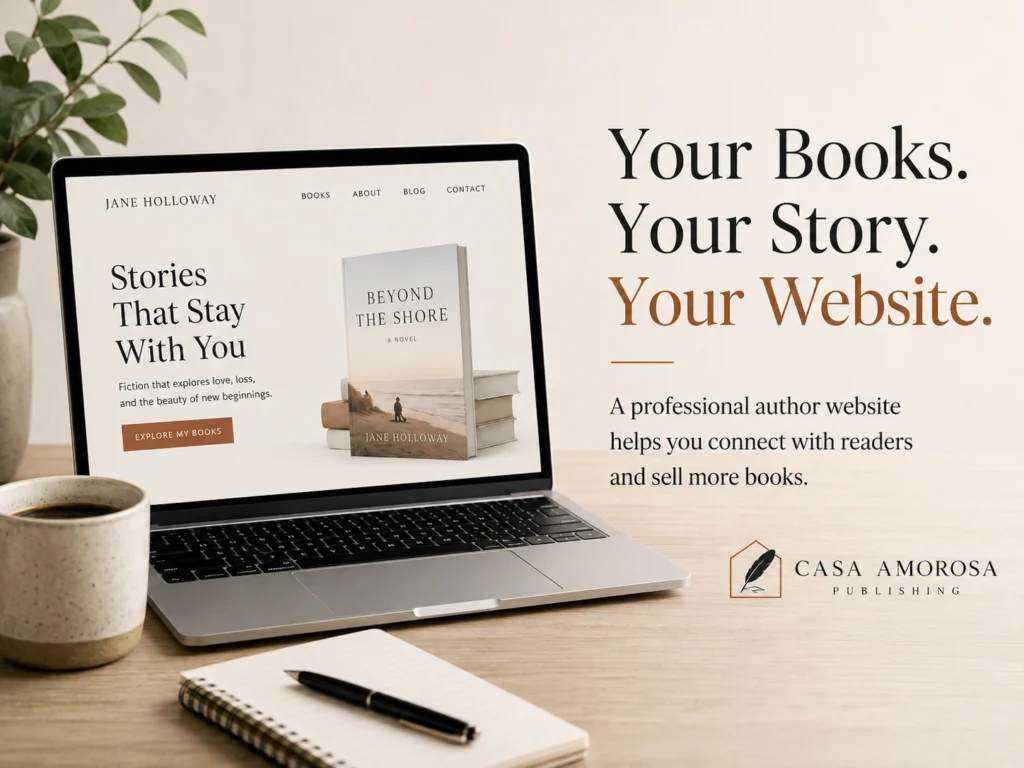
Publishing a book gives readers something to discover. An effective author website gives them a reason to stay connected. Your website should do more than display your biography and book cover. It should introduce your work, communicate what makes your books valuable, guide visitors toward the right title, and encourage them to take the next step. That next step might be purchasing a book, downloading a sample chapter, joining your email list, listening to an audiobook preview, attending an event, or following your author journey. Here is how to create an author website that turns casual visitors into interested readers and supports your long-term publishing goals. Why Every Author Needs a Professional Website Social media can help authors reach new audiences, but those platforms are controlled by other companies. Algorithms change, organic reach fluctuates, features disappear, and accounts can sometimes be restricted without warning. Your website is the digital space you control. A professional author website can help you: Establish credibility Present your books professionally Build your author brand Attract readers through search engines Collect email subscribers Promote events and appearances Share reviews and media features Sell books directly or link to retailers Support future book releases Instead of sending readers to several disconnected profiles, your website gives them one reliable destination for everything related to your work. Begin With a Clear Website Goal Before selecting colors, fonts, or page layouts, decide what your website should help visitors do. Your primary goal may be to: Sell a newly released book Build an email list Promote several titles Introduce your author brand Secure speaking engagements Attract media interviews Promote an audiobook Build interest before publication Sell books directly through an online store A website can support several objectives, but one action should usually receive the most attention. For example, an author launching a new title might use Buy the Book as the primary call to action. An author preparing for publication may prioritize Join the Newsletter or Download a Free Sample Chapter. Clear goals prevent the website from becoming a collection of unrelated information. Understand the Readers You Want to Reach Successful author website design starts with the intended audience. Consider who is most likely to visit your website and what they need to know before taking action. A fiction reader may want to explore: The story’s genre and themes Character introductions Series reading order Reviews from other readers Sample chapters Upcoming releases A nonfiction reader may look for: The problem the book addresses The author’s experience Practical outcomes or lessons Reader testimonials Related articles or resources Speaking or consulting information Authors of children’s books may need to speak to parents, teachers, librarians, and gift buyers rather than only young readers. Understanding your audience helps you choose the right message, images, structure, and calls to action. Create a Strong Homepage Your homepage should quickly explain who you are, what you write, and what visitors should do next. A visitor should not need to scroll through several sections to understand the purpose of the website. A strong author homepage usually includes: A Clear Headline Your headline should communicate your identity or the experience your books provide. Examples include: Historical fiction inspired by forgotten stories Practical leadership lessons for growing teams Inspiring children’s books about courage and kindness Suspense novels where every secret has a consequence Avoid relying only on a phrase such as “Welcome to my website.” It does not tell new visitors why your work may interest them. A Short Supporting Message Add one or two sentences explaining what readers can expect from your books. Keep the language focused on the reader rather than presenting a long personal history. A Primary Call to Action Use a visible button directing visitors toward the most important next step. Possible calls to action include: Buy the Book Explore the Series Read a Free Chapter Listen to the Audiobook Join the Newsletter View Upcoming Events Professional Visuals Use a high-quality author photo, book cover, lifestyle image, or carefully designed promotional visual. Avoid crowding the first section with too many covers, buttons, announcements, and paragraphs. A focused introduction creates a stronger first impression. Create a Dedicated Page for Every Book Each title should have its own page rather than being placed in one crowded list. A dedicated book page gives search engines and readers more information about the title. It also allows you to create a focused buying experience. Include the following elements: High-resolution book cover Clear title and subtitle Concise book description Genre or subject Intended audience Available formats Purchase buttons Selected reviews Sample chapter or preview Audiobook sample when available Publication details Related books Frequently asked questions For a book series, clearly show the correct reading order. Purchase buttons should be easy to find and accurately labeled. For example: Buy on Amazon Order the Paperback Get the eBook Listen to the Audiobook Buy Directly From the Author Do not make readers search through several pages to find purchasing options. Write Book Descriptions That Encourage Action A book description should communicate value and create interest without revealing everything. For fiction, it should introduce the central character, conflict, emotional stakes, and reason the reader should continue. For nonfiction, it should identify the reader’s problem, explain what the book helps them understand or accomplish, and clarify who will benefit from it. A useful structure is: Open with an attention-grabbing idea or problem. Introduce the central promise, story, or conflict. Explain what makes the book meaningful. Identify the intended reader. End with a clear invitation to purchase or explore the book. Avoid long summaries that describe every chapter or event. The goal is to create enough interest for the reader to take the next step. Make the Author Biography Reader-Focused Your About page should establish trust while helping readers connect with the person behind the books. Include: Your writing background The genres or subjects you explore Relevant professional experience The inspiration behind your work Selected accomplishments Personal details that support your brand A professional photograph Media or

How to Build an Author Website That Turns Visitors Into Readers Read More »

Book Marketing
The Journey Within Author’s Workspace

25 Affordable Book Marketing Strategies Every Author Should Try in 2026

Publishing a book is a major achievement, but reaching the right readers requires more than simply uploading it to an online bookstore. Authors must consistently promote their work, build relationships, and create reasons for readers to pay attention. The good news is that effective book marketing does not always require a large advertising budget. Many promotional strategies depend more on consistency, creativity, and audience engagement than expensive campaigns. Here are 25 practical ways to market your book without spending a huge amount of money. 1. Identify Your Ideal Reader Before promoting your book, clearly define the type of reader most likely to enjoy it. Consider their: Age range Interests Preferred book genres Common challenges or goals Favorite social-media platforms Online communities Purchasing habits A romance author may target a very different audience from someone publishing a leadership guide or children’s book. Understanding your ideal reader helps you choose the right platforms, messaging, and promotional content. 2. Optimize Your Book Description Your book description should encourage interested visitors to become buyers. A strong description usually includes: An attention-grabbing opening The central problem, conflict, or promise The value readers will receive A clear description of the target audience A compelling reason to continue reading Avoid summarizing every chapter or revealing the entire story. Give readers enough information to understand the book while creating curiosity. 3. Create an Author Website An author website gives readers one central place to learn about you and your books. Your website can include: Your author biography Individual book pages Purchase links Reviews and testimonials Upcoming events Media appearances A blog Newsletter registration Contact information Unlike social-media profiles, an author website is a digital asset you can control. It can support your long-term branding and help readers discover your work through search engines. 4. Start an Email List Email marketing allows you to communicate directly with readers without depending entirely on social-media algorithms. Encourage visitors to join your list by offering something valuable, such as: A free sample chapter A short story A printable guide Character profiles Discussion questions Early access to new releases A discount or limited promotion Send useful and interesting emails rather than constantly asking subscribers to purchase your book. 5. Claim Your Author Profiles Create or update your author profiles on platforms where readers research books and writers. Depending on your genre and publishing setup, these may include: Amazon Author Central Goodreads BookBub LinkedIn Facebook Instagram TikTok YouTube Use a consistent author biography, professional photo, website link, and book information across your profiles. 6. Choose Two Primary Social Platforms You do not need to promote your book on every social network. Choose one or two platforms where your ideal readers are most active. Focus on building a recognizable presence and maintaining a realistic content schedule. For example: LinkedIn may work well for business and leadership books. Instagram may suit visually driven genres and lifestyle topics. TikTok may help authors reach active fiction-reading communities. Facebook can support reader groups, events, and mature audiences. YouTube works well for education, interviews, and long-form content. A focused strategy is usually more effective than maintaining several inactive profiles. 7. Share Content Related to Your Book Do not make every post a direct sales promotion. Create content around the ideas, themes, experiences, or problems connected to your book. You can share: Writing insights Short quotations Character introductions Research discoveries Behind-the-scenes updates Industry tips Personal stories Reader questions Book recommendations This approach helps you attract people who are already interested in your subject or genre. 8. Turn One Idea Into Multiple Posts Content repurposing can reduce the time and cost of book promotion. One article or video can become: A short social-media video Several quote graphics A carousel post An email newsletter A podcast topic A question-and-answer post A blog excerpt Instead of constantly creating new material, present your strongest ideas in different formats. 9. Record Short Videos Short videos can help readers connect with the person behind the book. You can record simple videos explaining: Why you wrote the book What readers will learn The inspiration behind a character A common misconception about your topic Your writing process A short reading from the book A smartphone, clear audio, good lighting, and a useful message are often enough to get started. 10. Use Relevant Hashtags Carefully Hashtags can help categorize your content and connect it with relevant communities. Use a combination of: Genre hashtags Reader-community hashtags Topic-specific hashtags Author-related hashtags Location-based hashtags Branded hashtags Avoid adding dozens of unrelated hashtags. A smaller group of highly relevant terms can make your posts look more intentional. 11. Join Reader and Author Communities Participate in online communities where readers and writers discuss books, publishing, and specific genres. You may find relevant communities through: Facebook Groups Goodreads Groups LinkedIn Groups Reddit communities Writing forums Local book clubs Professional associations Read each community’s promotional rules before sharing your book. Contribute useful advice and genuine conversation instead of immediately posting sales links. 12. Request Honest Reader Reviews Reviews help potential buyers understand how other readers experienced your book. Invite members of your launch team, email subscribers, early readers, and legitimate customers to leave honest reviews. Never pressure someone to give a positive rating or offer rewards specifically in exchange for favorable feedback. Make the process easier by providing direct links to the appropriate review pages. 13. Build an Advance Reader Team An advance reader team receives the book before its official release and provides feedback, reviews, or voluntary promotional support. Potential advance readers may include: Existing subscribers Genre enthusiasts Book bloggers Fellow authors Professional contacts Relevant community members Give readers enough time to finish the book and explain clearly what type of support you are requesting. 14. Collaborate With Other Authors Authors who serve similar readers can help one another reach wider audiences. Possible collaborations include: Newsletter swaps Joint interviews Online panels Shared giveaways Social-media conversations Book bundles Live readings Guest blog posts Choose collaborators whose work complements yours rather than directly competing for the same

25 Affordable Book Marketing Strategies Every Author Should Try in 2026 Read More »

Book Marketing