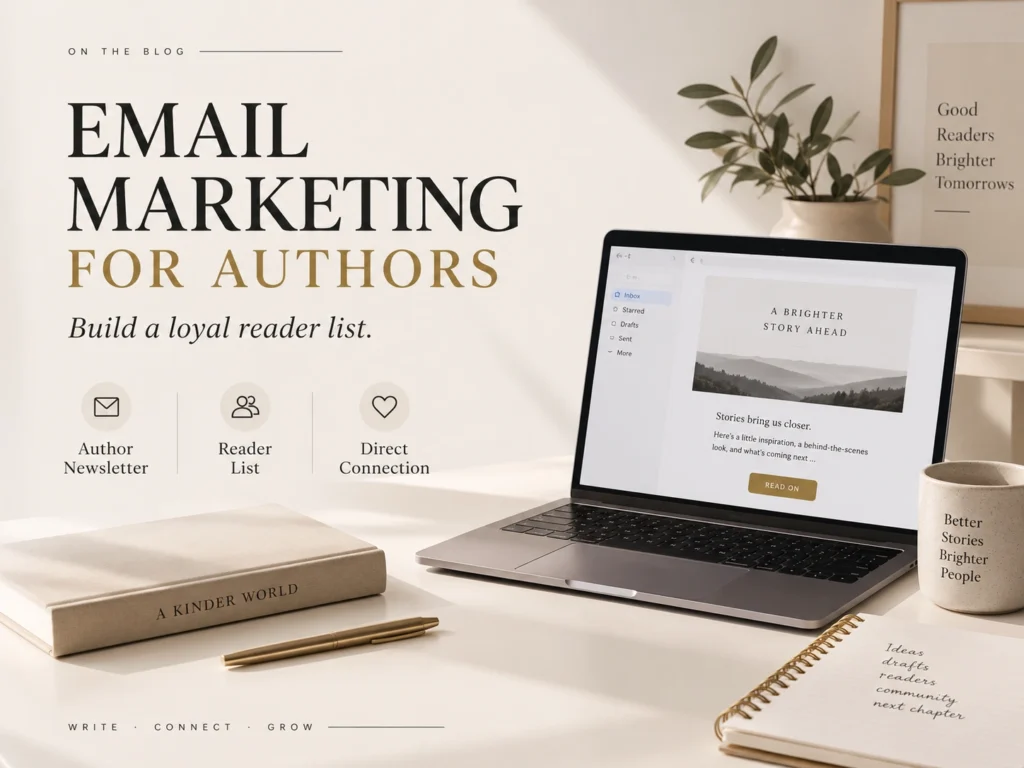
Email Marketing for Authors: Build a Loyal Audience That Buys Every Book
Email marketing for authors gives writers a direct way to stay connected with readers without relying entirely on social media algorithms. A strong email strategy can help you build a loyal audience, promote new books, share updates, and create long-term relationships with people who already care about your work. For authors, an email list can become one of the most valuable assets in a long-term marketing strategy. Why Email Marketing for Authors Matters Social media is useful for discovery, but authors do not fully control those platforms. Algorithms change. Organic reach can decline. Accounts can be restricted. Features can disappear. An email list gives you a more direct relationship with readers. With email marketing for authors, you can communicate with subscribers about: New releases Preorders Book launches Audiobooks Events Discounts Blog posts Behind-the-scenes updates Exclusive content Unlike social media, your reader list is built around people who have chosen to hear from you. Build Your Reader List Before You Need It Many authors wait until launch week to start collecting email subscribers. That is usually too late. The best time to build your reader list is before you need to promote a book. Start by adding sign-up opportunities to your: Author website Book pages Blog Social media profiles Event pages Landing pages Email signature The goal is to create a steady flow of new subscribers over time. Give Readers a Reason to Subscribe Most people will not join an author newsletter just because a form says “Subscribe.” Offer something useful or interesting. Examples include: A free sample chapter A short story A bonus scene A printable guide Character profiles Reading-group questions Early access to a new release Exclusive author updates The offer should match the type of reader you want to attract. Keep the Sign-Up Form Simple Do not ask for too much information. In many cases, a simple form asking for: First name Email address is enough. Long forms can reduce sign-ups. Make it clear what the subscriber will receive and how often you plan to send emails. Create a Strong Welcome Email The welcome email is the first message a new subscriber receives. It should confirm the subscription and begin building the relationship. A good welcome email can include: A thank-you message The promised free resource A short introduction Your main book or series What subscribers can expect next Links to your website or social media Keep it warm and easy to read. Build a Short Welcome Sequence One email is good. A short sequence can be even better. A simple welcome sequence might include: Email 1: Welcome Thank the subscriber and deliver the free resource. Email 2: Your Story Introduce yourself and explain what you write. Email 3: Your Books Share your main titles or series. Email 4: Helpful Content Provide something useful, entertaining, or interesting. Email 5: Stay Connected Invite readers to reply, follow you, or explore more of your work. This helps new subscribers understand your author brand before you ask them to buy anything. Use Your Author Newsletter to Build Relationships Your author newsletter should not be a constant sales message. Readers are more likely to stay subscribed when your emails provide value. You can share: Writing updates Book recommendations Behind-the-scenes stories Research discoveries Personal reflections Upcoming events New blog posts Reader questions Exclusive previews The goal is to stay useful and memorable. Decide How Often to Email There is no single perfect frequency. What matters most is consistency. You might send: Weekly emails Twice-monthly emails Monthly newsletters Choose a schedule you can maintain. Sending one useful email every month is better than sending five emails in one week and disappearing for three months. Segment Your Reader List As your list grows, not every subscriber will be interested in the same thing. You can segment readers based on: Genre interest Book purchased Location Event attendance Downloaded resource New subscriber Existing customer Segmentation can make your emails more relevant. For example, readers interested in children’s books may not need the same messages as readers following your business titles. Promote Books Without Overdoing It Your email list can support book sales, but promotion should feel natural. Good moments to promote include: New release Preorder period Audiobook launch Limited discount New edition Event Anniversary Related article Instead of simply saying “Buy my book,” explain why the book may matter to the reader. Use Email Marketing Before a Book Launch Email can support every stage of a launch. Before release, you can send: Cover reveal Preorder announcement Behind-the-scenes update Sample chapter Countdown Early review This creates anticipation before launch day. Use Email Marketing on Launch Day On launch day, make the message simple. Include: Book title Cover Short description Purchase link Available formats One clear call to action Do not overload the email with too many unrelated links. The main goal should be obvious. Continue Email Marketing After Launch Do not stop emailing once the book is released. After launch, you can share: Reader reviews Podcast appearances Event highlights Audiobook release Book-club discussions Related articles Seasonal promotions This keeps the book visible beyond the first week. Use Email to Encourage Honest Reviews After readers have had enough time to finish the book, you can politely ask for an honest review. Keep the request simple. For example: Finished the book? If you have a moment, consider sharing your honest feedback to help other readers decide if the book is right for them. Include a direct review link whenever possible. Create Better Subject Lines The subject line affects whether readers open the email. Good subject lines are: Clear Specific Relevant Natural Examples: A new chapter is ready for you Behind the scenes of my next book The audiobook is now available What inspired this story A quick update from my writing desk Avoid misleading clickbait. Trust matters more than short-term open rates. Keep Emails Easy to Read Most readers will scan your email quickly. Use: Short paragraphs Clear headings Simple formatting One main idea One primary call to action
Email Marketing for Authors: Build a Loyal Audience That Buys Every Book Read More »
Book Marketing