
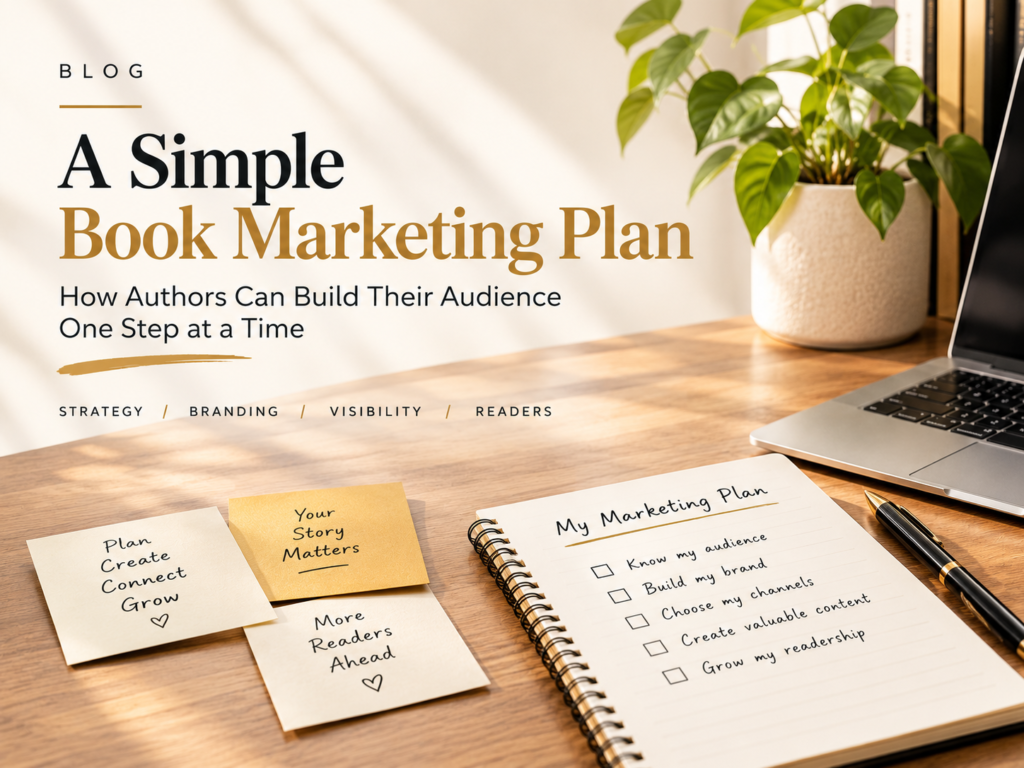
Writing a book takes time, patience, and commitment. But once the manuscript is finished, another challenge begins. How will readers discover it?
For many authors, marketing feels like unfamiliar territory. They may know how to tell a story, develop characters, or share a meaningful message. Yet promoting a book requires a different set of skills.
The good news is that you do not need to do everything at once.
A simple book marketing plan can help you focus on the right activities. It gives you direction without making the process feel overwhelming. More importantly, it helps you connect your book with the readers who may appreciate it most.
Whether you are preparing for your first release or promoting a book that has been available for years, a clear plan can make your efforts more consistent.
Start With the Reader, Not the Book
It is natural to begin marketing by talking about your book. You might share the cover, announce the release date, or post a link to purchase it.
These are useful steps. However, readers often need a reason to care before they decide to buy.
Start by asking a few simple questions.
- Who would enjoy reading this book?
- What might they learn, feel, or experience?
- What subjects interest them?
- Where do they usually discover new books?
Consider an author who has written a children’s book about friendship. The potential audience may include parents, teachers, librarians, and caregivers.
Each group has different interests. Parents may look for stories they can share with their children.
Teachers may want books that support classroom discussions. Librarians may be interested in diverse stories and engaging reading experiences.
The book stays the same, but the message changes to meet each audience’s needs.
This is the foundation of effective book marketing for authors. You are not simply promoting a product. You are helping the right readers understand why a story may matter to them.
Give Your Author Identity a Clear Direction
Readers encounter authors in many places. They may find a social media post, visit a website, watch an interview, or discover a book through a recommendation.
These experiences should feel connected.
That is where author identity comes in.
Your author identity is the impression people develop of you and your work. It reflects your interests, values, writing style, and the subjects you care about.
You do not need a complicated personal brand. You need a clear and believable one.
Think about what you want readers to remember.
Are you a children’s author who celebrates imagination and cultural diversity? Do you write mysteries built around unexpected discoveries? Perhaps your books explore family relationships, personal growth, or history.
Choose a few themes that represent your work. Use them consistently across your website, social media profiles, author biography, and promotional materials.
Your message should sound like you. Avoid copying another author’s style just because it seems successful.
A strong author identity gives readers something familiar to return to. It also helps booksellers, event organizers, interviewers, and potential partners understand your work.
Build an Author Brand That Feels Personal
Author branding is not just about choosing colors, designing a logo, or creating attractive graphics.
Those details matter, but they are only part of the picture.
Your brand also includes how you communicate, what you share, and how readers experience your work.
Start with the basics:
Your author website: Give visitors a place to learn about you and your books. Include your biography, book descriptions, purchasing links, and contact information. Add news or upcoming appearances when relevant.
Your social media profiles: Use clear profile images, accurate descriptions, and links to your website or books. Make it easy for visitors to understand who you are and what you write.
Your visual style: Choose a few colors, fonts, and image styles that suit your work. Keep them consistent without making every post look identical.
Your voice: Decide how you want to communicate with readers. You might be warm and conversational, thoughtful and reflective, or playful and imaginative.
Consistency builds recognition. Personality builds connection.
You can have a polished author brand without losing the qualities that make your work distinctive.
Choose Two or Three Marketing Channels
One common mistake is trying to maintain every social media platform at the same time.
An author may create accounts on Facebook, Instagram, TikTok, YouTube, LinkedIn, and several other platforms. Soon, keeping up with them becomes a job of its own.
Start smaller.
Choose two or three channels that match your audience and your available time.
For example:
- Facebook: Useful for community discussions, book announcements, reader groups, and event updates.
- Instagram: A visual space for book photography, short videos, reading recommendations, and behind-the-scenes content.
- YouTube: Suitable for book trailers, readings, author interviews, and longer conversations.
- LinkedIn: Worth considering for nonfiction authors, professional writers, and authors whose work connects with education, business, or industry.
- TikTok: An option for authors who enjoy short-form video and want to participate in book-related conversations.
You do not need to use every platform. Choose the ones you can maintain well.
It is better to publish useful content consistently on two channels than to post randomly on six.
Also, remember that social media is only one part of your marketing plan. Your website, email list, bookstore relationships, media appearances, and reader recommendations can support your efforts over time.
Plan Content Readers Will Want to See
A book marketing plan should include more than repeated sales announcements.
Readers may be interested in your book, but they also want reasons to follow your journey. Give them something worth stopping for.
A simple content mix can help.
Share the story behind the book. Explain what inspired a character, subject, setting, or central idea. Keep the story interesting without revealing everything.
Introduce your writing process. Share a glimpse of your research, notes, workspace, or revision process. These details can make your work feel more accessible.
Discuss the themes in your book. Connect your story to questions readers may already care about. A book about courage, for example, can lead to a conversation about facing difficult choices.
Celebrate milestones. Share publication dates, event appearances, media features, reader feedback, or new editions when they are confirmed.
Invite conversation. Ask readers about a favorite character, a memorable book, or a question related to your subject. Respond to genuine comments when you can.
Promote the book directly. Include clear purchasing information and explain what readers can expect from the book.
A balanced content calendar makes promotion feel more natural. It also helps you avoid the pressure of inventing a new idea every morning.
Use a Simple Four-Week Marketing Plan
You do not need a complicated spreadsheet to get started. A basic four-week plan can help you establish a routine.
Week 1: Clarify Your Message
Review your author biography, website, book description, and social media profiles.
Do they present a consistent picture of your work?
Update outdated information. Check that your purchasing links work. Make sure your contact details are correct.
Choose three key messages you want readers to associate with your book or author identity.
Week 2: Introduce Your Story
Create content that gives readers a closer look at your work.
Share the inspiration behind the book. Introduce a theme or character. Explain why you chose to write about the subject.
Include a book image or short video if it adds value.
The goal is to give people a reason to learn more.
Week 3: Build Connections
Look for opportunities to reach people beyond your existing audience.
You might contact a relevant book club, explore a library event, approach a suitable podcast, or connect with a bookstore that serves your readership.
Research each opportunity before making contact. Consider whether its audience matches your book and whether the terms are reasonable.
Focus on genuine relationships rather than collecting as many contacts as possible.
Week 4: Review and Adjust
Look at your recent activity.
Which posts received meaningful comments? Which videos attracted attention? Did people visit your website or click your book links?
Use the information available to decide what to try next.
Do not judge every activity by immediate book sales. Some efforts help people discover your name. Others strengthen relationships or introduce your work to potential partners.
Marketing becomes more useful when you learn from each cycle.
- Know When to Consider Book Marketing Services
Some authors prefer to manage their own promotion. Others need help because they have limited time, lack marketing experience, or want to reach a broader audience.
This is where book marketing services may be useful.
Depending on the provider, services can include author branding, social media management, promotional campaigns, content creation, website development, publicity outreach, and audience research.
The important question is not whether you need every service. It is which tasks are holding you back.
If your website does not explain your work clearly, start with your online presence. If you struggle to maintain social media, consider content planning and management. If you want to explore interviews or literary events, look for support with relevant outreach.
Before choosing a provider, ask a few practical questions:
- What exactly is included in the service?
- Who will create and approve the content?
- How will progress be measured?
- Will you retain ownership of your accounts and materials?
- What reporting will you receive?
- Are there additional fees or limits?
Look for clear answers and realistic expectations.
No service can guarantee that a book will become a bestseller or attract a particular number of readers. Good marketing creates opportunities for discovery, improves consistency, and helps authors communicate their value.
The right support should make your plan easier to manage, not more difficult to understand.
Measure Progress Without Obsessing Over Numbers
Marketing results rarely follow a perfect schedule.
One post may receive little attention. Another may lead to a valuable conversation. An event may introduce your book to a small group of readers who later recommend it to others.
That is why it helps to track a few meaningful measures.
Depending on your goals, these might include:
- Website visits and visits to book pages
- Clicks on purchasing links
- Social media comments, shares, and saves
- Email subscribers
- Event inquiries and interview invitations
- Book sales, where reliable data is available
Choose measures that connect to your actual goals.
If you want to build awareness, reach and relevant engagement may be useful. If you want to sell books, track purchasing activity where possible. If you want to develop professional relationships, monitor inquiries and confirmed opportunities.
Review the results monthly. Look for patterns instead of reacting to every individual post.
Then make one or two adjustments. Test a different topic, improve a headline, change your posting schedule, or try another format.
Small improvements can help you build a more sustainable approach.
Keep Marketing Sustainable
Authors already have plenty to do. Writing, editing, researching, and preparing a new book all require attention.
Your marketing plan should support your writing life rather than consume it.
Set a realistic schedule. You might spend one afternoon planning content, another creating posts, and a short period each week responding to readers.
Reuse ideas thoughtfully. A blog post can become several social media posts. An interview can provide material for a newsletter. A reader question can inspire a new article.
Repurposing content does not mean posting the same message everywhere. Adapt each piece to the platform and audience.
Leave room for unexpected opportunities, too. A relevant event, timely discussion, or reader response may deserve more attention than a scheduled post.
Consistency matters, but flexibility matters as well.
Most importantly, protect time for writing. Your next book may become one of your strongest reasons for readers to stay connected.
Your Book Marketing Plan Starts With One Step
You do not need a perfect strategy before you begin.
Start by understanding your audience. Give your author identity a clear direction. Build an author brand that reflects your work. Choose a manageable number of platforms and share content that offers something beyond a sales pitch.
Then review your progress and adjust your approach.
Book marketing for authors is not simply about making more announcements. It is about helping readers discover your work,
understand what makes it meaningful, and find ways to stay connected.
Some authors will manage this process independently. Others will benefit from professional book marketing services. Both approaches can work when the plan fits the author’s goals, resources, and audience.
At Casa Amorosa, we believe every book deserves a thoughtful approach to promotion. The first step is understanding the author, the story, and the readers it is meant to reach.
Ready to build a clearer plan for your book? Explore Casa Amorosa’s promotional strategy services and discover how a more focused approach can support your author brand and marketing goals.