
A closer look at reader behavior, book discovery, purchasing decisions, and the importance of building an author identity.
Publishing a book is an achievement worth celebrating. But once a book becomes available to readers, another challenge begins: helping the right people discover it.
For many authors, this is where uncertainty starts. Should they invest in social media? Do they need an author website? Are book reviews important? How often should they promote their work? And how can they tell whether their marketing efforts are making a difference?
These questions deserve more than general advice. Authors need to understand how readers discover books, what influences their decisions, and how an author’s online presence contributes to long-term recognition.
Research from publishing organizations and independent studies offers useful insights into these questions. While no research can predict the sales of an individual book, it can help authors make more informed marketing decisions.
At Casa Amorosa Group LLC, our goal is to help authors understand this process and develop marketing strategies that support both their books and their identities as writers. We believe that book promotion should not end with a launch announcement. It should be part of a broader effort to build visibility, connect with readers, and establish a recognizable author presence.
1. Book Discovery Starts in More Places Than You Think
One of the first questions authors ask is: Where do readers discover new books?
According to BookNet Canada’s Canadian Leisure & Reading Study 2025, the leading ways Canadian readers discovered books in 2025 were:
- Word of mouth, including book clubs and reading groups: 36%
- Bookstores: 27%
- Public libraries: 26%
- Social media: 23%
- Online book retailers: 18%
Respondents could select up to three discovery methods.
The findings demonstrate that book discovery is not limited to online advertising or social media. Readers encounter books through personal recommendations, physical bookstores, libraries, digital communities, and online retail platforms.
For authors, this means that relying on a single promotional channel may limit opportunities for discovery.
Social media can introduce a book to new audiences, while an author website can provide more information. Reader communities can encourage discussion, and recommendations can introduce a title to people who may not have encountered it otherwise.
The practical lesson is to develop a marketing presence that supports multiple discovery opportunities.
What authors can do: Identify the places where their intended readers spend time. Build a consistent online presence, participate in relevant reading communities, and make book information easy to access.
2. Social Media Can Support Book Discovery, but Platform Selection Matters
Should every author have a Facebook, Instagram, TikTok, YouTube, and LinkedIn account?
Not necessarily.
The best platforms depend on the author’s audience, genre, professional background, content preferences, and marketing objectives.
Pew Research Center’s Social Media Fact Sheet provides a useful reference for understanding platform adoption in the United States.
Its 2025 survey of 5,022 U.S. adults found:
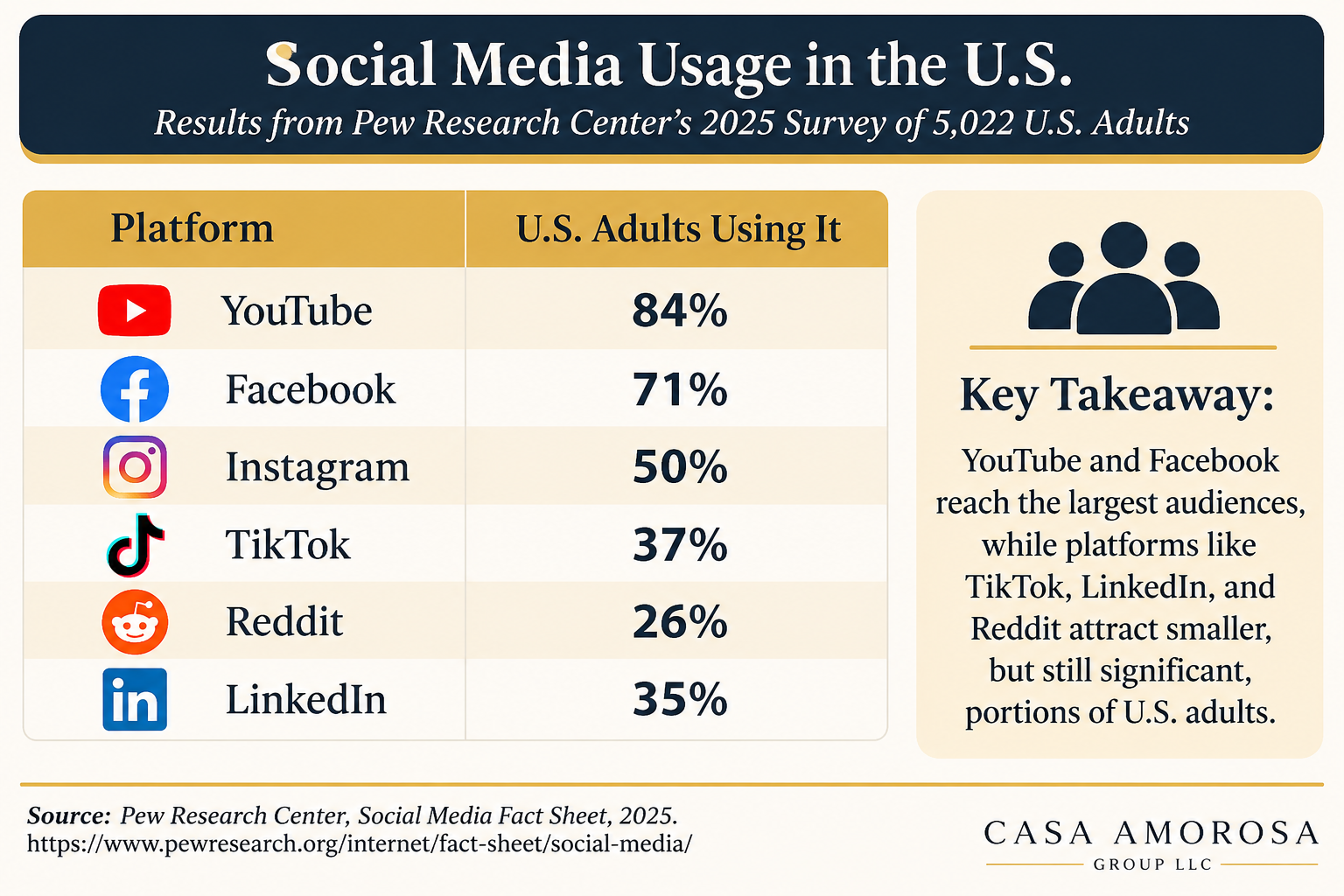
These figures measure general platform usage, not book purchasing behavior. However, they help authors understand the potential reach of different platforms.
Each platform also offers different opportunities.
Facebook can support reader communities, discussions, and event promotion. Instagram provides opportunities for visual storytelling, author features, and short-form videos. TikTok can introduce books through short videos and reader-focused content. YouTube supports book trailers, author interviews, discussions, and longer videos.
LinkedIn may be especially relevant for nonfiction authors, business writers, leadership professionals, and authors who want to connect their books with their professional expertise.
The objective is not to create accounts everywhere. It is to select platforms that make sense for the intended readership and maintain them consistently.
What authors can do: Start with the platforms most relevant to their audience. Evaluate actual engagement and referral traffic before expanding to additional channels.
3. Readers May Become Interested in the Author, Not Just One Book
Book promotion often focuses on a single title. However, research suggests that readers can develop an interest in the person behind the publication.
BookNet Canada’s 2025 leisure and reading study found that:
37% of readers searched for other books by an author.
21% went online to read about an author or follow them on social media.
23% shared a book experience, the book itself, or a photo of it with others.
These activities indicate that reader interest can extend beyond an individual publication.
For authors with multiple books, this is particularly relevant. A reader who discovers one title may eventually explore other publications by the same writer.
This is why author branding deserves attention.
An author identity communicates who the writer is, what subjects they explore, what perspectives they bring, and what readers can expect from their work.
For example, a mystery novelist may develop a recognizable identity around suspense, storytelling, and literary interests. A leadership author may establish their presence through professional insights, educational content, and discussions related to their field.
A consistent author identity helps connect different publications under one recognizable presence.
Explore our guide to building a memorable author brand for more information.
What authors can do: Develop an author biography, professional website, consistent visual identity, and social media presence that represent them beyond a single book release.
4. What Actually Influences a Reader’s Decision to Choose a Book?
Getting noticed is only the beginning. Authors must also give readers a reason to become interested.
BookNet Canada’s Canadian Leisure & Reading Study 2025 identified the following leading influences on which books readers chose:
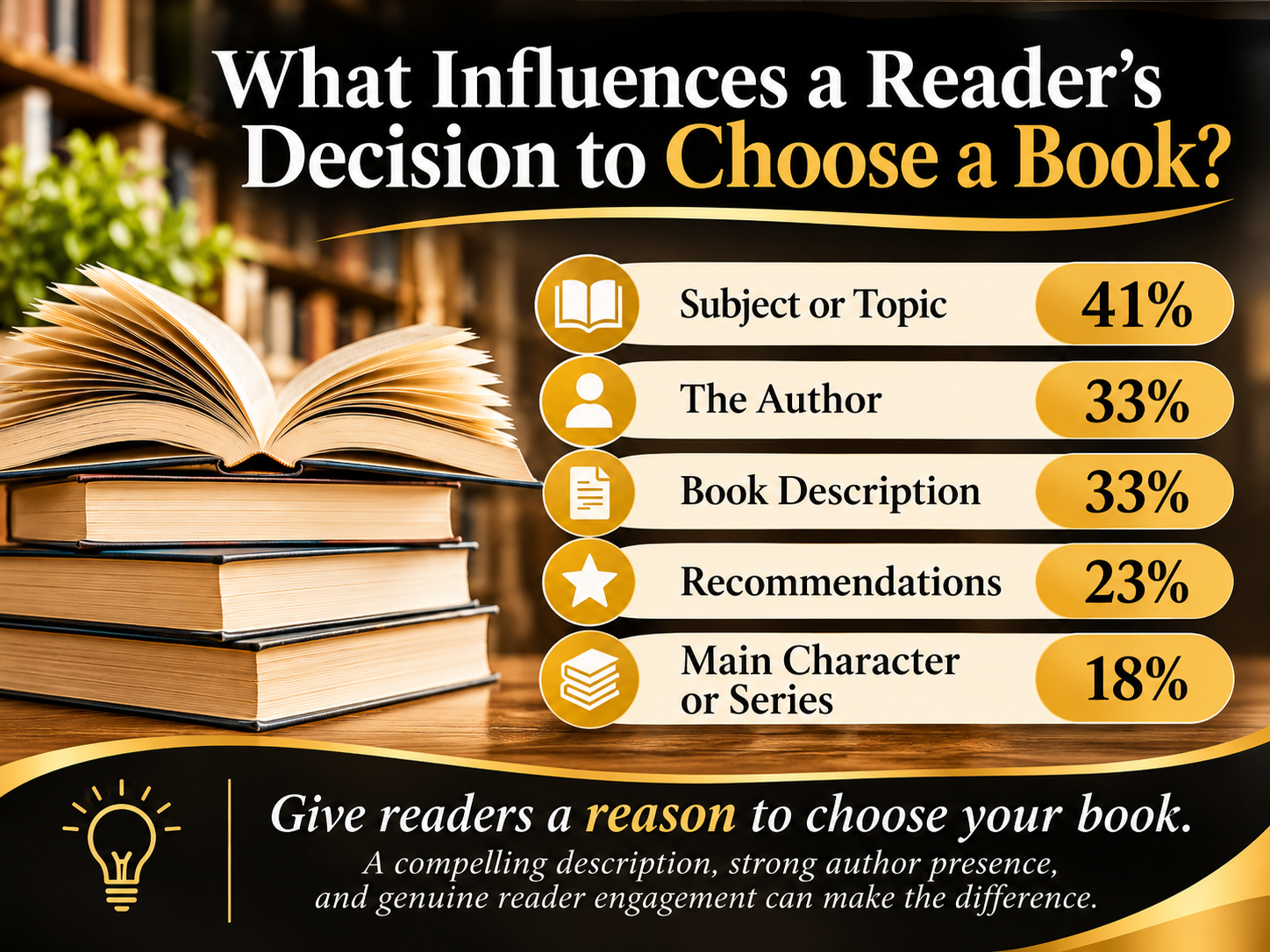
These findings show that readers consider several elements before deciding which book to explore.
The subject must appeal to their interests. The author may already have recognition. The description should communicate what the book offers, while recommendations can provide additional reasons to investigate it.
This has important implications for promotional content.
A graphic that displays only a title and cover may identify a book, but it may not communicate why someone should read it.
Fiction authors can introduce the genre, themes, atmosphere, and central questions without revealing important plot developments. Nonfiction authors can highlight the subject, ideas, practical value, or problems explored in their books.
The book description also deserves careful attention. It should be understandable, relevant, and consistent with the intended readership.
What authors can do: Review their book descriptions, promotional messaging, and online presentation. Make sure readers can quickly understand what the book is about and why it may interest them.
5. Are Reviews and Reader Recommendations Important?
Authors frequently ask how they can obtain more reviews and whether recommendations influence book purchases.
BookNet Canada’s Canadian Book Consumer Study 2025 provides useful evidence.
The study found that 22% of Canadian book buyers became aware of the books they purchased through recommendations or reviews. Online or in-person browsing accounted for 19%, while 18% discovered books because they had read other works by the same author.
When asked what influenced their purchasing decisions, 18% identified a recommendation or review.
These figures demonstrate that recommendations can contribute to book discovery and purchasing decisions.
However, authors should distinguish between genuine reader feedback and promotional activity. Reviews should represent actual reader experiences. They should never be purchased or presented as independent opinions when they are not.
Authors can encourage authentic feedback by inviting readers to share their experiences, making review links accessible, and participating in appropriate reading communities.
What authors can do: Build genuine relationships with readers, encourage voluntary feedback, and make it easy for interested readers to find the book on legitimate retail and review platforms.
6. Does an Author Need a Website?
Social media provides opportunities for visibility, but an author website serves a different purpose.
It gives authors a central online location where readers can explore their books, learn about their background, find purchasing information, and discover other relevant content.
A website can also support search visibility.
For example, an author who writes about leadership may publish useful articles related to management, communication, or professional development. A fiction author might share research behind a novel, discuss genre-related topics, or introduce the inspiration behind a particular book.
This creates additional opportunities for readers to discover the author through search engines.
A website is not a guarantee of traffic or sales. It needs useful information, clear navigation, relevant content, and appropriate links to book retailers.
Nevertheless, it provides an online destination that an author can organize around their identity and publications.
For more guidance, explore SEO for Authors: How to Improve Your Online Discoverability.
What authors can do: Treat their website as a professional author platform rather than simply an online business card. Keep book information, biography, contact details, and relevant content updated.
7. Why Should Marketing Continue After Publication?
Some authors assume that marketing is primarily a launch activity. Once the book is published, they shift their attention to writing the next one.
However, book discovery and author recognition can continue developing long after publication.
The Authors Guild’s 2023 Author Income Survey offers additional context about the business of writing.
The survey included 5,699 published authors and reported that the median book income for all surveyed authors was $2,000 in 2022. For full-time authors in commercial markets, the median book income was $15,000.
The survey also found that the most effective marketing channels identified by respondents included Kindle Unlimited and other subscription programs, ebook discounts and promotions, and author email newsletters.
Interestingly, the survey found that social media and blogging were generally rated among the least effective channels overall, although TikTok performed particularly well for certain genres.
This is an important reminder that marketing effectiveness varies. A strategy that works for one author may not produce the same results for another.
It also demonstrates why authors should not depend exclusively on social media.
An ongoing marketing strategy may combine promotional content, newsletters, reader communities, book discovery opportunities, website content, and other relevant channels.
What authors can do: Maintain a long-term promotional plan. Continue introducing their books to new audiences while developing an author presence that supports future publications.
8. How Can Authors Measure Marketing Progress?
Another important question is how authors can determine whether their marketing efforts are working.
A campaign should not be evaluated solely by the number of posts published or followers gained.
Different performance indicators reveal different aspects of audience behavior.
Consider these examples:
Reach: How many unique accounts encountered the content?
Impressions: How often was the content displayed?
Engagement: Did people interact with the content?
Video retention: Did viewers continue watching?
Website visits: Did social media audiences explore the author’s website?
Book-link clicks: Did people show interest in the book?
Conversions: Did visitors complete a desired action?
Book sales: Did the campaign contribute to measurable purchases?
For example, strong social engagement combined with low website traffic may indicate that content needs clearer calls to action.
High website traffic with few book-link clicks may indicate that the book page, description, or purchasing information needs improvement.
These indicators help identify opportunities to refine a campaign.
However, authors should remember that marketing does not guarantee a particular number of sales, reviews, followers, or publishing opportunities. Sales attribution can also be difficult when readers discover books through multiple channels.
What authors can do: Establish measurable objectives before a campaign begins and review performance regularly. Use the findings to improve future promotional activities.
9. How Casa Amorosa Helps Authors Build Beyond a Book Launch
Understanding reader behavior and marketing research is a useful starting point. Applying those insights to an individual author’s needs requires planning, consistency, and an understanding of the book itself.
This is the approach Casa Amorosa Group LLC aims to bring to author marketing.
We believe that authors deserve more than occasional promotional posts. They need a strategy that considers their books, their identities, their intended readers, and their long-term objectives.
Our work focuses on four connected areas.
Book Marketing and Promotion
We help authors develop promotional strategies based on their books, genres, target readership, and marketing objectives. This can include campaign planning, content development, book promotion, and audience engagement.
Author Branding and Identity
We help authors establish a recognizable presence through author profiles, brand positioning, professional websites, and consistent digital communication.
Social Media Management
We support authors with content calendars, promotional graphics, captions, short-form videos, publishing schedules, and social media management across relevant platforms.
Video and Digital Content Production
We help transform book themes, author insights, and promotional concepts into digital materials that can introduce authors and their publications to potential readers.
The specific activities depend on the author’s requirements and selected services.
A first-time author may need help establishing an online identity and introducing a newly published book. An established author may need a coordinated strategy for multiple titles and continued audience development.
Our objective is to understand the author’s starting point before recommending promotional activities.
Learn more about our book promotion and promotional strategy services.
10. Helping the Right Readers Discover Your Work
Every book has a different purpose, audience, and message. That is why effective marketing should not rely on a generic formula.
Research helps authors understand how readers discover books and what may influence their decisions. But the next step is applying that information to the individual publication and author.
The goal is not to be present on every social media platform or publish promotional content simply to remain active.
It is to create meaningful opportunities for readers to discover a book, understand its value, and become interested in the author behind it.
At Casa Amorosa Group LLC, our goal is to help authors develop that foundation through strategic book marketing, thoughtful promotion, author branding, and digital content.
We want authors to have a clearer understanding of their marketing journey, the opportunities available to them, and the steps they can take to build a more recognizable presence.
Your book is one part of your story as an author. Building your identity, connecting with readers, and creating opportunities for discovery are part of what comes next.
Let’s Build Your Author Presence
Whether you are preparing to introduce your first book or looking to strengthen the visibility of an existing collection, Casa Amorosa can help you explore a marketing approach aligned with your goals.
Visit Casa Amorosa Group LLC to learn more about our book marketing, book promotion, author branding, and digital content services.
Let’s help more readers discover your work and recognize the author behind it.